

 admin
admin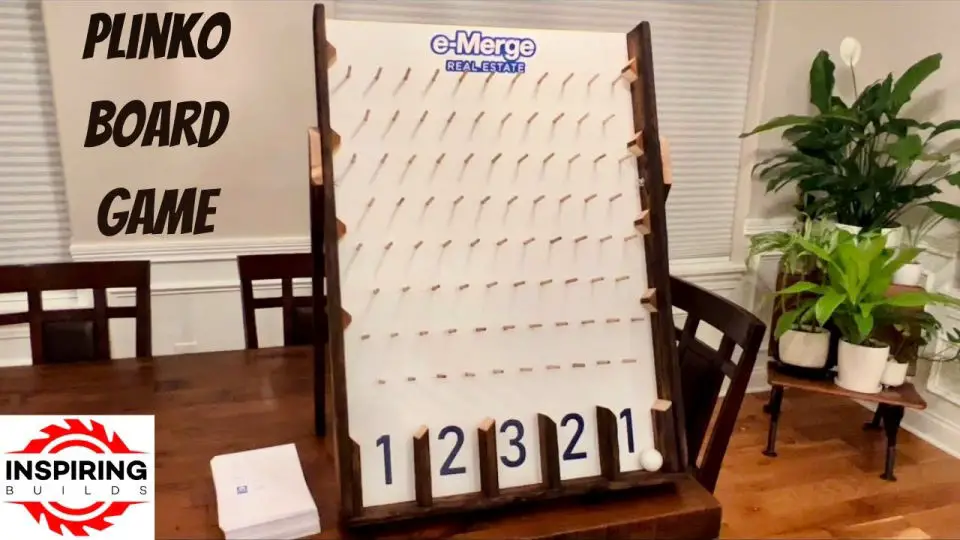
Understanding Plinko Board Physics: The Realistic Approach
If you’ve ever watched those colorful discs dropping through a maze in a Plinko game, you might have wondered about the physics that governs their movement. In this article, we will explore how forces like gravity, collisions, and randomness come into play when a chip makes its journey down the Plinko board. Whether you are a casual player or a physics enthusiast, understanding the mechanics of the Plinko board can enhance your appreciation of this classic game.Plinko Board Physics With Realistic Mechanics plinko-casino-game.co.nz

What is Plinko?
Plinko is a popular game that originated from television game shows. Contestants drop discs or chips down a board filled with pegs. As the chips bounce off these pegs, they navigate through a maze and land in various prize slots at the bottom, often with considerable randomness involved. Though simple in concept, the game exemplifies the principles of physics, making it a fascinating subject of study.
The Physics of a Plinko Board
The behavior of a chip in a Plinko board can be analyzed through various physical principles, primarily those relating to mechanics. Let’s break down the key components:
1. Gravity
Gravity is the fundamental force that causes each disc to fall downward. When you drop a chip from the top of the Plinko board, it begins to accelerate towards the Earth due to gravitational pull. The acceleration is approximately 9.81 m/s², which is the standard acceleration due to gravity on Earth. This downward force is the starting point for understanding the motion of the chip as it travels downwards.
2. Collisions with Pegs
As the chip descends, it collides with pegs strategically placed across the board. Each collision alters the direction of the chip’s motion. Depending on the angle and point of impact, the chip may deflect to the left or right. These collisions can be modeled as elastic collisions, where kinetic energy is conserved, or inelastic collisions, where some energy is lost in the form of sound or heat. The specific outcome of each collision is integral to determining which slot the chip will land in.
3. Randomness and Probability
While the physics of the board is deterministic, meaning every force and collision can theoretically be calculated, the complexity and sensitivity of the system make the outcome appear random. Different starting positions and minute variations in the angle of entry can lead to vastly different paths. This underlying randomness is a significant factor in the game’s design, creating both excitement and uncertainty.
Realistic Simulation of Plinko Physics
To fully appreciate the dynamics of a Plinko board, we can use computer simulations that implement the laws of physics. By modeling the board, pegs, and chips using physics engines or custom algorithms, we can visualize how many paths a chip might take and how likely it is to land in each slot.
Creating a Simulation
1. **Model the Board:** Start by creating a graphical representation of the Plinko board. This includes the vertical layout of pegs and thresholds represented as slots at the bottom.
2. **Define Forces:** Implement gravitational forces acting on the chip and define how it interacts with the pegs during collisions.
3. **Control Input:** Allow for the manipulation of the chip’s drop point to analyze how different starting positions can alter the outcome remarkably.
4. **Output Result:** Finally, display the most common landing spots for the chips and the probabilities associated with each outcome.
Applications Beyond Gaming
The principles observed in Plinko boards extend into various fields. Understanding particle dynamics, collision response, and probability distributions can aid in disciplines such as:
- Physics Education: Visual demonstrations can help students grasp fundamental principles of mechanics.
- Game Design: Insights into randomness and player engagement can drive more engaging game mechanics.
- Engineering: The principles of collision dynamics and material properties can influence the design of physical structures.
Conclusion
The world of Plinko boards is a captivating intersection of entertainment and physics. Understanding the underlying physical principles can enrich the experience of playing, providing insight into how randomness functions within a seemingly chaotic system. By leveraging simulations and mathematical models, we can predict outcomes and uncover the deeper intricacies of this beloved game.
Next time you watch or participate in a Plinko game, consider the fascinating physics at play. Whether for fun or educational purposes, the Plinko board serves as a practical illustration of theoretical concepts in action.